
The Transformative Power of AI in Business
- The Transformative Power of AI in Business
- Key Areas of AI Application
- Supply Chain and Manufacturing
- Marketing and Sales
- Customer Service
- Human Resources
- Finance and Banking
- IT and Cybersecurity
- AI Tools and Platforms
- AI-Powered Productivity Platforms
- Language Models
- AI-Driven Search Engines
- Content Creation Tools
- Business Intelligence Platforms
- Implementing AI in Business
- Identifying Opportunities
- Training and Support
- Starting Small and Iterating
- Choosing the Right Tools
- The Future of AI in Business
- Challenges and Risks
- Conclusion
The integration of ai in business is no longer a futuristic concept; it's a present-day reality transforming how organisations operate and compete. From streamlining mundane tasks to generating innovative strategies, artificial intelligence is proving to be a powerful tool across various sectors. This article explores the diverse ways AI is being applied in business, drawing upon insights from multiple sources to provide a comprehensive understanding of its impact.
The Transformative Power of AI in Business
The adoption of ai in business is being driven by its potential to reinvent critical processes, offering intelligent automation, cost reduction, and improved decision-making. As organisations look for ways to stay competitive, AI is increasingly seen as an essential component of digital transformation, moving beyond simple automation to provide dynamic and adaptive solutions. In fact, a recent study indicated that AI adoption in businesses has surged to 72% in 2024, up from around 50% in previous years. This demonstrates a growing recognition of AI's capacity to deliver real value.
Key Areas of AI Application
While the possibilities of ai in business are vast, certain areas are seeing significant impact. AI's capacity to automate tasks and augment human capabilities is a key driver across different business functions.
Supply Chain and Manufacturing
AI is revolutionising supply chain management and manufacturing, leading to increased efficiency and reduced costs. One of the most significant areas is predictive maintenance, which uses machine learning to analyse data from sensors on machinery and predict when maintenance is needed, reducing downtime and improving operational lifespans. AI also enhances production processes by analysing data to optimise workflows on the fly, ensuring more efficient use of resources.
Marketing and Sales
AI-powered tools are transforming marketing and sales strategies, enabling businesses to better understand their customers and deliver more personalised experiences. Recommendation engines use AI to analyse customer data and provide real-time personalised suggestions for products or services, improving conversion rates. Furthermore, AI is being used to automate and personalise customer service, offering chatbots that can handle enquiries efficiently and effectively.
Customer Service
Customer service is another area where ai in business is making significant strides. Chatbots powered by natural language processing (NLP) are increasingly common, providing instant support and resolving customer issues quickly. These AI-driven customer service tools not only improve customer satisfaction but also free up human agents to focus on more complex cases.
Human Resources
Human Resources (HR) departments are leveraging AI to streamline hiring processes, enhance employee experiences, and improve talent management. AI can be used to screen candidates, identify top performers, and automate responses to employee queries through virtual assistants, freeing up HR staff to focus on strategic initiatives rather than administrative tasks.
Finance and Banking
The financial sector has been an early adopter of ai in business, utilising it to process vast amounts of data for risk assessment, fraud detection, and algorithmic trading. AI is also used to automate and personalise customer service through chatbots and virtual assistants, including robo-advisors that provide investment and portfolio advice.
IT and Cybersecurity
AI is also playing a crucial role in IT service management and cybersecurity. Machine learning is used to analyse IT infrastructure and processes, enabling better understanding and management. In cybersecurity, AI is applied to detect anomalies, solve false-positive problems, and conduct behavioural threat analytics, enhancing overall security posture.
AI Tools and Platforms
The ai in business landscape is supported by a variety of tools and platforms designed to meet diverse needs.
AI-Powered Productivity Platforms
Platforms like ClickUp AI integrate AI directly into project management workflows, assisting with tasks such as text generation, language translation, and idea generation. This streamlines processes and boosts productivity for teams across different functions.
Language Models
ChatGPT, developed by OpenAI, is an AI-powered language model that can generate human-like text, translate languages, and answer queries on a wide range of topics. This tool has applications across various business functions, from content creation to customer service.
AI-Driven Search Engines
Perplexity AI is an AI-powered search engine that provides accurate, summarised answers to complex questions. It uses advanced AI to search the internet in real-time and provides citations for the information, making it a useful tool for research and knowledge management.
Content Creation Tools
Jasper AI is an AI-powered writing assistant that helps businesses create high-quality content quickly and easily. It uses AI to generate text, translate languages, and produce creative content.
Business Intelligence Platforms
Platforms like SAP HANA and Domo are designed to help businesses manage and analyse data, gaining insights from customer, sales, or product inventory information. These platforms use machine learning to identify trends, anomalies, and make more informed decisions.

Implementing AI in Business
Successfully implementing ai in business requires a strategic approach and a focus on continuous improvement.
Identifying Opportunities
Businesses must first identify areas where AI can have the most significant impact. This involves understanding business needs, researching how other companies are using AI, and evaluating internal capabilities.
Training and Support
It's crucial to provide employees with training and support to ensure they are comfortable using AI tools. This could involve AI certifications, workshops, or peer-to-peer learning opportunities.
Starting Small and Iterating
Rather than a big bang approach, it's recommended to start with small pilot projects, test hypotheses, and rigorously measure results. This allows for iterative improvements and reduces the risk associated with large-scale implementations.
Choosing the Right Tools
Selecting the right AI vendors and partners is critical, focusing on their financial stability, technical capabilities, scalability, and compatibility with existing systems.
The Future of AI in Business
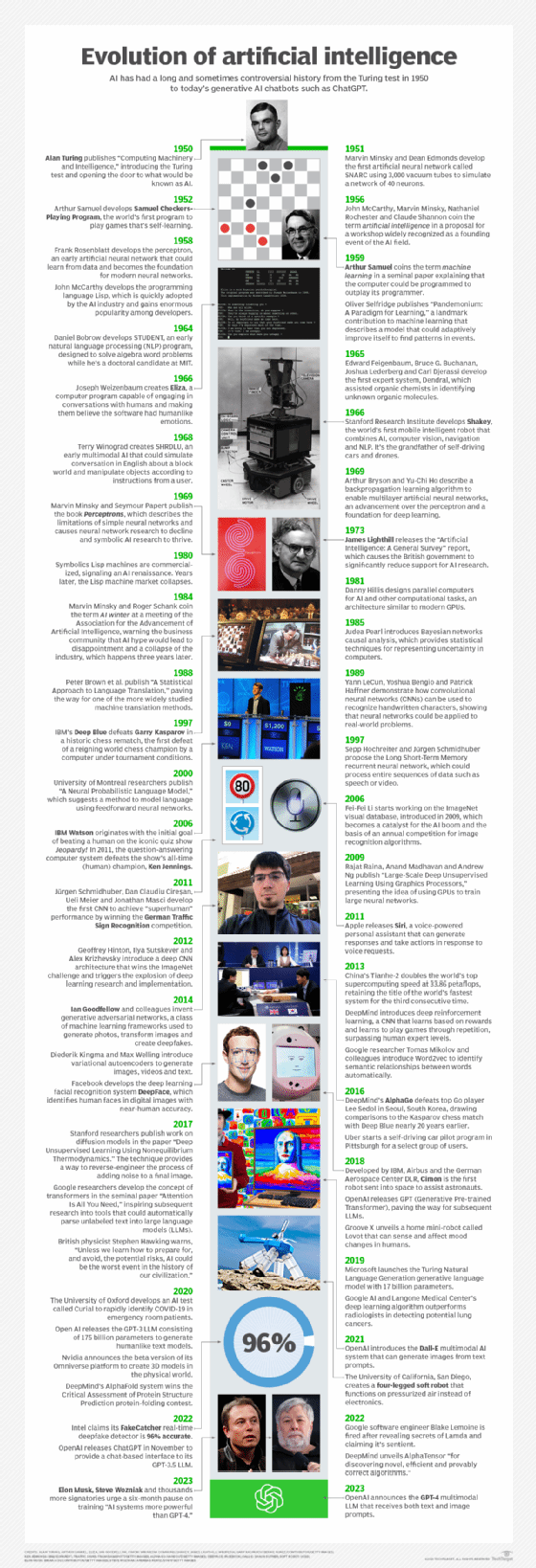
The future of ai in business is poised for continued growth and transformation. Rapid advancements in large language models, agentic AI systems, and embodied AI are creating new opportunities across various industries. The focus is shifting towards customised AI models for specialised business needs, and an increasing emphasis is being placed on the responsible and ethical use of AI.
 Credit: techtarget.com
Challenges and Risks
While the benefits of ai in business are clear, it's crucial to acknowledge the challenges and risks. Worker mistrust, unintentional bias in algorithms, and unexplainable results are some of the key issues that need to be addressed. Additionally, the potential for job losses and the need for strong AI governance policies are also important considerations.
Conclusion
The application of ai in business is rapidly evolving, offering unprecedented opportunities for growth, innovation, and efficiency. By focusing on strategic implementation, continuous learning, and responsible usage, businesses can harness the full potential of AI to achieve their goals and stay competitive in the ever-changing marketplace.