
How Australian Businesses Can Grow with AI: FAQ
- Understanding the AI Landscape in Australia
- AI Adoption and Business Presence
- NSW as a Leader in AI
- How Australian Businesses Can Growth with AI FAQ
- What are the Economic Benefits of AI for Australian Businesses?
- How is AI Transforming the Future of Work in Australia?
- How Can Businesses Prepare for AI Adoption?
- What Skills are Needed for an AI-Driven Workforce?
- What Support is Available for Businesses Adopting AI?
- What are the Legal and Ethical Considerations for AI?
- How is AI Being Used in Different Sectors?
- Conclusion
The rise of Artificial Intelligence (AI) presents a significant opportunity for Australian businesses to enhance productivity, drive innovation, and achieve substantial growth. This article aims to address frequently asked questions about how Australian businesses can growth with AI FAQ, providing a comprehensive overview based on recent reports and analysis. We will explore the current AI landscape in Australia, the potential benefits, and the steps businesses can take to leverage AI for growth.
Understanding the AI Landscape in Australia
Australia is experiencing a rapid adoption of AI technologies, with a significant number of businesses already utilising AI. This section will delve into the current state of AI adoption and the factors making Australia a prime location for AI development.
AI Adoption and Business Presence
A substantial 89% of large Australian businesses are already using AI technology, showcasing the widespread acceptance and integration of AI across various sectors. New South Wales (NSW) stands out as a hub for AI development, hosting 241 AI businesses, which constitute 45% of the total AI businesses in Australia. This concentration of AI businesses, comparable to cities like Berlin, Singapore, and Toronto, demonstrates the strength and vibrancy of the Australian AI ecosystem. Furthermore, NSW employs 38% of Australia's total software and application programmers, highlighting the availability of skilled talent.
NSW as a Leader in AI
NSW is a technology leader in the Asia-Pacific region, being the first state in Australia to publish its AI strategy, which supports collaboration between industry, government, and academia to bolster world-class AI capabilities. The state also boasts two of Australia's five world-leading AI universities, including the Centre for Field Robotics at the University of Sydney and the AI & Robotics Research Group at the University of NSW. The multicultural and multilingual population of NSW provides a unique advantage for developing inclusive AI products that can be deployed globally.

Credit: https://www.investment.nsw.gov.au/

Credit: https://www.investment.nsw.gov.au/

Credit: https://www.investment.nsw.gov.au/

Credit: https://www.investment.nsw.gov.au/

Credit: https://www.investment.nsw.gov.au/
How Australian Businesses Can Growth with AI FAQ
This section addresses specific questions about how businesses can leverage AI for growth. We will cover the potential economic benefits, the impact on different sectors, and the skills required to navigate this evolving landscape.
What are the Economic Benefits of AI for Australian Businesses?
AI offers significant economic benefits for Australian businesses. Analysis suggests that the adoption of AI-powered tools could contribute $280 billion to the Australian economy by 2030. This economic growth stems from improved operational efficiency, enhanced customer insights, and the identification of new market opportunities. Furthermore, AI can play a crucial role in strengthening cybersecurity, potentially preventing $6.7 billion in cybercrime losses by 2030, and in mitigating the impacts of climate change, with potential savings of $3.9 billion in property damage.
How is AI Transforming the Future of Work in Australia?
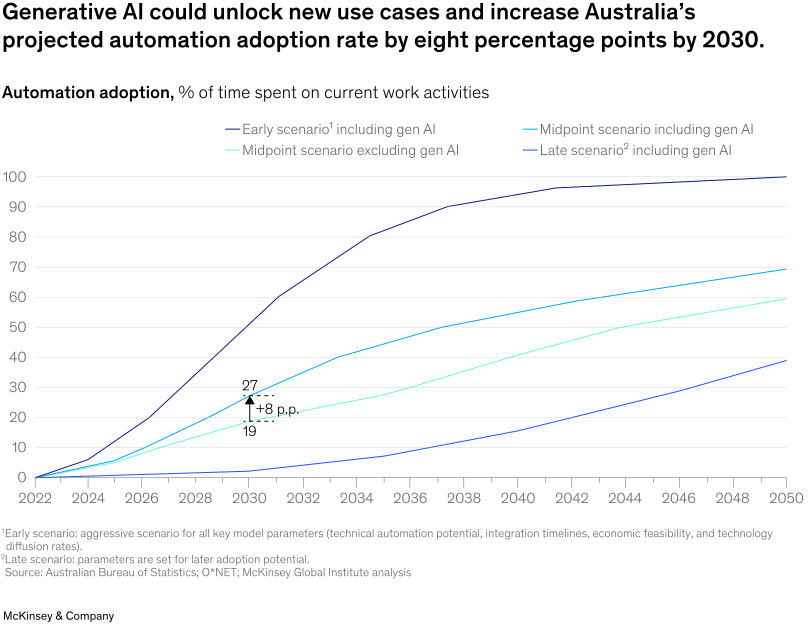
Generative AI (gen AI) is rapidly transforming the Australian workforce by automating a larger percentage of work tasks. Where previously it was estimated that 44% of Australian work hours could be automated, this has now increased to a potential of 62% with the emergence of gen AI, and could rise to between 79% and 98% by 2030. While the full implementation of this potential will take time, even a midpoint scenario suggests that around one-quarter of all work hours could be automated by 2030. This shift will impact all sectors and occupations but especially education, professional and technical services, and finance and insurance.
This change will require approximately 1.3 million workers to transition out of their current roles into new occupations by 2030. This includes a large number of workers in office support, food services, customer service and sales. However, there is also significant growth in science and technology, healthcare, and professional services. It is anticipated that there will be a higher demand for workers with social, emotional, and technological skills.
Credit: https://www.mckinsey.com/
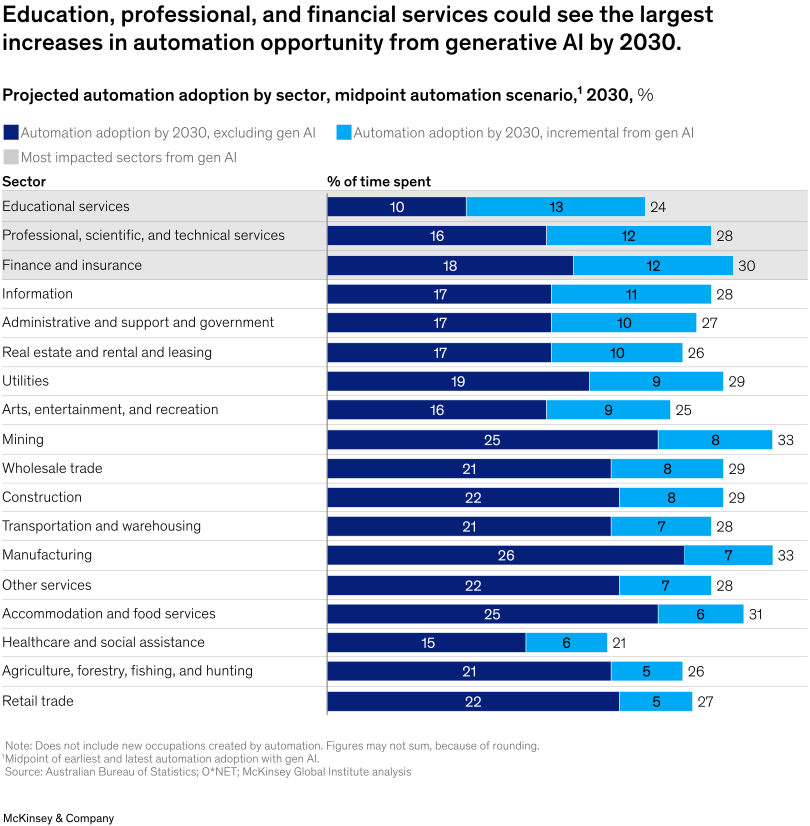
Credit: https://www.mckinsey.com/
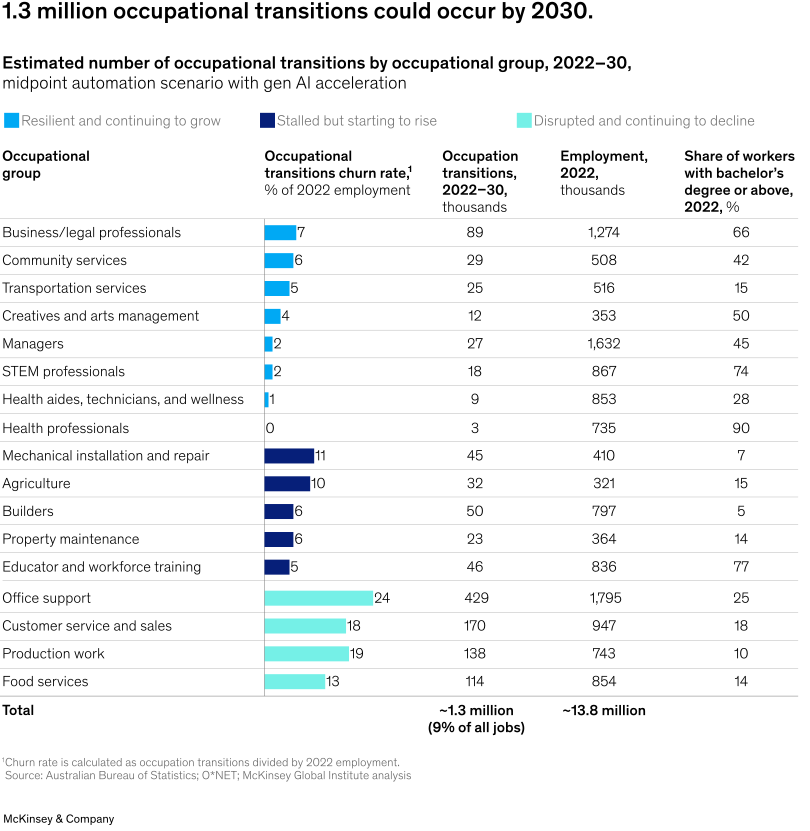
Credit: https://www.mckinsey.com/
How Can Businesses Prepare for AI Adoption?
Businesses can prepare for AI adoption by focusing on several key areas. Firstly, it's essential to develop a strategic workforce plan that aligns with the capabilities needed in an AI-driven environment. This includes understanding how AI will affect the business’s competitive advantage and value proposition. Secondly, businesses should invest in upskilling and reskilling their workforce to ensure they have the necessary skills to work alongside AI technologies. Thirdly, a focus on "privacy by design" is crucial, which means implementing AI systems in accordance with existing AI frameworks and ensuring that personal information is handled responsibly. Finally, businesses must be prepared to pivot if AI products are not as effective as anticipated and should not be overly reliant on a single AI provider.
What Skills are Needed for an AI-Driven Workforce?
The future workforce will require a mix of social, emotional, and technological skills. Occupations requiring empathy and advanced problem-solving skills, such as those in healthcare and science, will remain in demand. However, the increasing digitisation of jobs across all sectors means that workers will need to develop their digital skills. In addition, there will be less demand for jobs that require only basic cognitive skills. Higher education will remain important, particularly in STEM, health, business, and legal professions.
What Support is Available for Businesses Adopting AI?
Investment NSW provides a range of services and incentives to support businesses looking to grow their presence in NSW. This includes guidance on grants, rebates, programs, and other incentives, as well as assistance with site identification and development. They also provide market insights, connections to key stakeholders, and familiarisation visits to help businesses establish themselves in the region. Additionally, the Business & Skilled Migration Program supports the growing tech industries by attracting skilled workers and providing visa and migration advice. The International Landing Pad offers free office accommodation to overseas technology businesses expanding into Australia.

Credit: https://blog.google/

Credit: https://blog.google/

Credit: https://blog.google/
What are the Legal and Ethical Considerations for AI?
Businesses must also consider the legal and ethical implications of AI. The Australian government has introduced both voluntary and mandatory guardrails for AI, aiming to balance innovation with responsible use of the technology. The voluntary AI Safety Standard provides guidance on how to develop and implement AI safely, while mandatory guardrails for high-risk settings are being considered. The Privacy Act 1988 (Cth) also applies to AI, governing how personal information is collected, stored, used and protected. The Office of the Australian Information Commissioner (OAIC) has released guidelines on privacy and the use of commercially available AI products as well as guidance on developing and training AI models. The key takeaway is that personal information should not be used to 'train' generative AI models without appropriate privacy notices being issued.
How is AI Being Used in Different Sectors?
AI is being used across various sectors to drive efficiency and innovation. For instance, in the retail sector, AI is used for personalisation, inventory management, and customer service. In financial services and insurance, AI is used for risk assessment, fraud detection, and customer support. In the public sector, AI is transforming education delivery, citizen interactions, and financial analysis.

Credit: https://www.mckinsey.com/
Conclusion
The integration of AI presents a transformative opportunity for Australian businesses to achieve growth and innovation. By understanding the AI landscape, addressing the skills gap, and adhering to legal and ethical guidelines, businesses can effectively leverage AI to enhance their operations and contribute to Australia's economic prosperity. The information provided here should help businesses understand how Australian businesses can growth with AI FAQ and provide a starting point for their AI journey.